

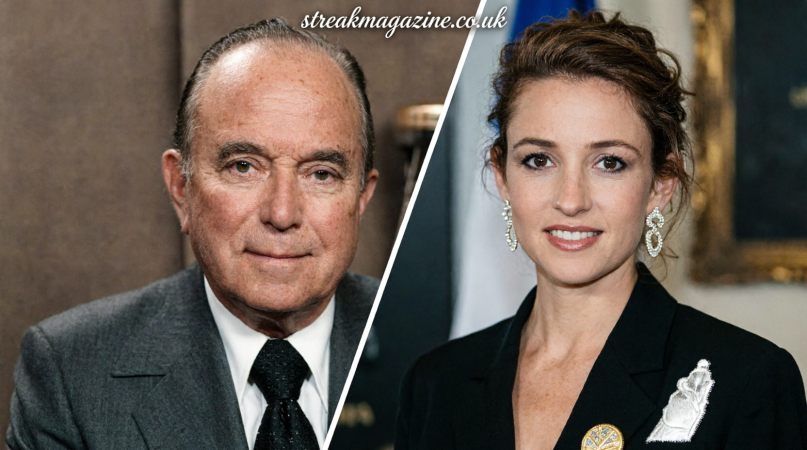
Who Was Jane Dobbins Green?
Who was Jane Dobbins Green? She was an American secretary. She became known as the second Ray Kroc wife. She reportedly worked for actor John Wayne before her marriage. Her life remained private even when she entered a famous business family. Most versions of the Jane Dobbins Green biography focus on her relationship with Ray Kroc. He was the American entrepreneur who expanded McDonald’s across the United States. Jane married him in 1963. Their marriage ended in 1968. She later married Paul D. Whitney. Reports give her birth date as November 22, 1911. They state that she died on August 7, 2000. This would make the Jane Dobbins Green age 88 at the time of her death. Reliable public records about her are limited. She did not write a memoir. She also gave no widely known interviews about the Kroc family. This lack of evidence has led to many weak claims online. Some websites invent details about her wealth, education, family, and emotions. A factual account should separate documented events from guesses. Jane deserves more than a dramatic story created from missing information.
Quick Bio
| Quick Facts | Details |
|---|---|
| Full Name | Jane Dobbins Green |
| Known For | Being the first wife of Ray Kroc |
| Spouse | Ray Kroc |
| Marriage | Married Ray Kroc in 1922 |
| Children | One daughter, Marilyn Kroc |
| Nationality | American |
| Occupation | Private individual (no widely documented public career) |
| Famous As | Ray Kroc’s first wife |
| Divorce | Divorced Ray Kroc in 1961 |
| Public Profile | Largely stayed out of the public spotlight |
| Legacy | Best known for her connection to Ray Kroc during the early years of his life and career |
Jane’s Early Life and Education
The early life of Jane Dobbins Green is not well documented. Some profiles connect her with Walla Walla, Washington. Yet strong public sources say little about her parents, childhood home, or education. This does not mean she lacked an interesting family background. It means that her private records did not become part of a major public archive. Jane grew up during a time when many women entered office work through typing and secretarial training. Such work required care, good judgment, and strong communication. It often placed women close to powerful people without giving them public credit. Jane later found a career in Hollywood. She reportedly worked as John Wayne’s secretary. The job may have included calls, letters, appointments, and travel plans. It would also have required privacy. John Wayne was already a major public figure. His business and personal schedule needed careful management. Jane Dobbins Green photos from this period are hard to verify. Search results often show unrelated women or poorly labeled event images. Readers should check the original photo archive before accepting any caption. Her Hollywood work remains one of the few known parts of her independent life before Ray.
Jane Dobbins Green Family Facts
Information about the Jane Dobbins Green family remains scarce. No dependable public record shows that Jane had biological children. Searches for Jane Dobbins Green children often lead to Ray Kroc’s daughter from his first marriage. That daughter was Marilyn Janet Kroc, also called Marilyn or Lynn Kroc Barg. Her mother was Ethel Fleming, not Jane. Marilyn was born in 1924 and died in 1973. She was the only confirmed child in the Ray Kroc family tree. Jane did not become Marilyn’s mother, though she became her stepmother when she married Ray. Claims about Jane Dobbins Green descendants also lack firm support. Some family-tree sites attach people to her without publishing records that prove the connection. Writers should not turn an uncertain online tree into a fact. The same care applies to Jane Dobbins Green net worth. No credible financial record gives a reliable figure for her personal fortune. Her divorce settlement and later estate are not clearly documented in major reporting. Large amounts shown on celebrity websites often come from guesses. Jane had links to wealth, but that does not prove that she owned a set share of the McDonald’s fortune.
Meeting and Marrying Ray Kroc
How is Jane Dobbins Green related to Ray Kroc? She was his second wife. Was Jane Dobbins Green married to Ray Kroc? Yes. They married in 1963 and divorced in 1968. The exact story of their first meeting remains unclear. Their relationship began after the end of Ray’s first marriage. Ray had married Ethel Fleming in 1922. They spent almost 40 years together and raised their daughter, Marilyn. Their marriage ended in 1961. Before that divorce, Ray had met Joan Kroc, then known as Joan Smith. Joan was a pianist and was married to Rollie Smith. Ray became attracted to her. The relationship did not lead to an immediate marriage. Ray later met Jane and made her his second wife. Some retellings present Jane as a temporary figure between Ethel and Joan. That view is unfair. Jane shared five years of her life with Ray. She lived beside him during a demanding period of corporate growth. Her private thoughts are unknown. She left no public record explaining what she expected from the marriage. A responsible biography should not invent her words, jealousy, or private arguments simply to create drama.
Marriage During McDonald’s Expansion
Jane married Ray two years after he gained control of McDonald’s. The company was growing fast. It needed new restaurant sites, trained franchise owners, reliable suppliers, and strict food rules. Ray traveled often and spent long hours on the business. Jane lived beside that pressure, but there is no solid evidence that she worked for McDonald’s Corporation. She did not direct its marketing strategy or restaurant management. She also did not create its franchise business model. Her role was personal, not corporate. This point matters because some modern biographies try to give her a secret leadership position. Respecting Jane does not require inventing achievements. Her actual experience already says much about Ray Kroc personal life. Ray placed great energy into his work. His persistence helped the company, but it also affected his relationships. Jane’s preference for privacy stood against his rising public image. The Golden Arches became more visible each year. Her own name stayed outside company reports. She did not use the marriage to build a media career. What is Jane Dobbins Green known for? She is known for marrying Kroc, yet her Hollywood career and quiet life show that she had an identity before and after him.
Divorce and Jane’s Later Years
Jane and Ray ended their marriage in 1968. Public sources provide few details about the divorce. No reliable record gives a full account of the settlement. Jane did not release a public statement that explained the breakup. Ray married Joan Smith in 1969. Joan Beverly Kroc was also known as Joan B. Kroc and Joni Kroc. She remained his wife until his death. This quick timeline has led many writers to blame the divorce on Ray’s earlier feelings for Joan. That may have played a part, but the private causes cannot be proved from dates alone. Jane later married Paul D. Whitney. This makes Whitney another Jane Dobbins Green husband, although Ray remains the spouse most often linked to her name. She continued to avoid publicity. What happened to Jane Dobbins Green? She lived away from the McDonald’s spotlight and died in Los Angeles, California, on August 7, 2000. The commonly reported cause of death is not backed by a strong public source. A Jane Dobbins Green obituary is also difficult to locate in a major newspaper archive. Many pages labeled as an obituary are recent biographies rather than notices published when she died.
Who Was Ray Kroc?
Raymond Albert Kroc was born on October 5, 1902, in Oak Park, Illinois. He became a salesman, businessman, and fast food pioneer. His career changed the restaurant industry. Yet the common label “McDonald’s founder” needs an explanation. Ray did not open the original McDonald’s restaurant. Richard McDonald and Maurice McDonald did. The McDonald brothers opened their first restaurant in San Bernardino, California, in 1940. They later rebuilt its operation around speed and a small menu. Ray joined their business as a franchising agent in 1954. He opened his first location under their system in Des Plaines, Illinois, in 1955. He bought their rights in 1961. A fair Ray Kroc biography gives credit to both sides. The brothers created the early operating system. Ray built the large franchise network. His work affected restaurant franchising across American business history. It also helped shape modern American capitalism. He made a familiar hamburger, French fries, and milkshake available through a repeated process. His business legacy came from scale, control, and brand expansion. He became famous because he turned a small California system into a national and later global company.
From Salesman to Fast Food Pioneer
Ray did not become successful at a young age. He worked for many years before meeting the McDonald brothers. As a teenager, he trained as a Red Cross ambulance driver during World War I. The war ended before he went overseas. He later worked as a pianist and sold real estate. He then spent years selling paper cups. This career introduced him to restaurant owners in Chicago, Illinois, and other American cities. He learned how food businesses managed cost and customer volume. Ray later began selling a milkshake mixer for Prince Castle. The machine was called the Multimixer. It could prepare several drinks at once. One large order came from a restaurant in San Bernardino, California. The owners used eight machines. Ray wanted to know why one location needed so much capacity. He traveled to California in 1954 and watched the operation. Customers moved quickly. The menu was short. Workers repeated simple jobs. Ray saw that this system could support restaurant franchising. His career as a salesman gave him the confidence to promote the idea. It also taught him how to face rejection. Persistence became a major part of his business leadership.
The McDonald Brothers and Their System
Who founded McDonald’s? Richard McDonald and Maurice McDonald founded the original business. They opened McDonald’s Bar-B-Q in 1940. The restaurant first used a common drive-in model. It had carhops and a large menu. In 1948, the brothers closed the location for changes. They returned with the Speedee Service System. It used a smaller menu and an organized kitchen. Each worker handled a clear task. Customers ordered at a window. Food arrived quickly. The system reduced costs and supported a low-priced hamburger. French fries later replaced potato chips. Milkshakes also became a major seller. The original McDonald’s restaurant attracted families and working people who wanted fast service. How did Ray Kroc meet the McDonald brothers? Their large Multimixer order drew his attention. He visited their restaurant and asked about national expansion. Did Ray Kroc create McDonald’s? No. He saw the value of an existing system and built a company around it. This distinction sits at the center of McDonald’s history. Ray brought major skill and ambition, but the McDonald brothers supplied the name, early menu, kitchen method, and basic customer experience that first impressed him.
McDonald’s First Franchise and Growth
Ray became the brothers’ national franchise agent. He opened his first McDonald’s franchise in Des Plaines, Illinois, on April 15, 1955. It was not the first McDonald’s restaurant in history. It was the first location operated by Ray’s new organization. He formed McDonald’s System, Inc., which later became McDonald’s Corporation. He wanted every restaurant to offer a similar experience. A customer in Illinois should receive the same basic food as a customer in California. This goal required clear rules. Franchise owners had to follow set cooking times and portion sizes. Restaurants needed clean counters and reliable service. Ray also preferred local franchise ownership. He wanted operators who worked closely with their stores. This method helped him watch quality and protect the brand. Franchise success depended on many people. Managers trained workers. Suppliers produced standard ingredients. Owners invested money and time. Employees kept each restaurant running. Ray pushed the system, but he did not work alone. McDonald’s expansion came from a network. The company’s official McDonald’s history places Ray’s 1954 visit and 1955 restaurant at the start of its modern growth story.
Real Estate, Training, and New Products
The early franchise fees did not give Ray enough income or control. Harry J. Sonneborn helped solve this problem. He supported a business strategy based on property. The company obtained restaurant sites and leased them to operators. Rent created regular income. Control of the lease also gave the company power over a weak franchise owner. This approach made real estate part of the franchise business model. Training offered another form of control. Hamburger University opened in 1961. It taught restaurant management and operating rules. Fred Turner helped shape many of these standards. He later became a leading executive at McDonald’s Corporation. Franchise owners also created successful products. Jim Delligatti developed the Big Mac in the Pittsburgh market. The company tested it and later sold it across the United States. This showed that innovation could come from a franchisee while the corporation controlled the national release. The Big Mac became part of the company’s marketing strategy. The Golden Arches, simple menu, and family advertising built a strong public identity. These choices supported brand expansion. They also helped turn McDonald’s into the main symbol of the fast food revolution.
Buying McDonald’s and Going Global
When did Ray Kroc buy McDonald’s? He bought the brothers’ business rights in 1961. How much did Ray Kroc pay for McDonald’s? The confirmed price was $2.7 million. The Library of Congress reports that about 300 restaurants were operating at the time. Ray and the brothers wanted different futures. Richard McDonald and Maurice McDonald had already earned financial security. Ray wanted faster corporate growth. The sale gave him control of the name and operating system. Accounts also describe an oral royalty promise that did not appear in the final contract. The disputed agreement became a major source of criticism. What happened to the McDonald brothers? They received the buyout payment and left the main corporation. Their original San Bernardino location was excluded from the sale, but it could no longer use the McDonald’s name. Maurice died in 1971. Richard lived until 1998. Under Ray, McDonald’s global expansion moved beyond the United States. The company entered new markets and adapted some products to local tastes. Still, it kept its core rules. This mix of local ownership and central control supported the McDonald’s success story.
Ray Kroc’s Marriages and Family Tree
Ray Kroc marriages reveal a personal story that was less stable than his public business image. He married Ethel Fleming in 1922. They had one daughter, Marilyn Janet Kroc. The marriage ended in 1961. Ray married Jane in 1963. They divorced in 1968. He then married Joan Kroc in 1969. Joan had a daughter, Linda Smith, from her earlier marriage, but Linda was Ray’s stepdaughter. Ray had no confirmed biological children with Jane or Joan. The Ray Kroc family tree is often reported incorrectly because websites mix biological children with stepchildren. Marilyn was his only confirmed biological child. She died before Ray. This fact also helps answer questions about the Kroc family inheritance. Ray’s personal life remained closely tied to his business travel and strong ambition. His three wives experienced different stages of his career. Ethel knew him before the company. Jane lived with him during rapid expansion. Joan shared his later wealth and public position. The Kroc family became a business family through the success of McDonald’s, but most relatives did not hold the same public power as Ray.
| Spouse | Marriage period | Children with Ray |
|---|---|---|
| Ethel Fleming | 1922–1961 | Marilyn Janet Kroc |
| Jane Dobbins Green | 1963–1968 | None confirmed |
| Joan Kroc | 1969–1984 | None |
Wealth, Death, and Philanthropy
What was Ray Kroc’s net worth? Exact figures vary by source and method. TIME reported that the family fortune was worth at least $500 million when he died. The Seattle Times later described Joan’s inherited fortune as about $525 million. Ray also owned the San Diego Padres. He had bought the baseball team in 1974 and spent part of his later life in San Diego, California. Ray died there on January 14, 1984. He was 81. His cause of death was heart failure. Who inherited Ray Kroc’s fortune? Joan Kroc received control of most of his wealth. She became a major American philanthropist. Her philanthropy supported peace programs, public radio, medical care, and community centers. The Kroc Foundation gave money to several causes. Joan also supported Ronald McDonald House Charities. After her death in 2003, large gifts went to NPR, the Salvation Army, and universities. The Associated Press reports that her Salvation Army gift funded 26 Kroc community centers. Her estate turned private wealth into public programs. Joan B. Kroc created a separate legacy from Ray’s work in the fast food industry. Her giving remains one of the largest examples of individual philanthropy in the United States.
The Founder and Ray Kroc’s Business Legacy
The Founder (2016 film) brought Ray’s story to a modern audience. Michael Keaton played Kroc. The Founder (film) showed him as a frustrated salesman who found the McDonald brothers and gained control of their idea. The movie presents real people and events, but it is a drama. It creates dialogue and compresses timelines. It also gives Jane little attention. Viewers should not use it as the only source for a biography. Ray offered his own account in the memoir Grinding It Out. That book also reflects his personal view. What is Ray Kroc famous for? He is famous for building McDonald’s into a powerful franchise company. How did Ray Kroc build McDonald’s? He combined franchising, property control, strict operating rules, training, marketing, and local ownership. His leadership helped create large-scale growth. His methods also raised questions about fairness and credit. Supporters see business lessons in his persistence and focus. Critics point to the disputed treatment of the brothers and damage in his personal relationships. His career reflects both innovation and hard American capitalism. He did not invent the first restaurant, but he changed the scale of the restaurant industry. That business legacy still shapes how franchise companies operate.
Conclusion
Jane Dobbins Green and Ray Kroc shared only five years of marriage, yet those years connected two very different public identities. Jane entered the relationship with Hollywood work behind her and maintained her privacy after the divorce. Kroc entered it while directing one of the fastest-growing restaurant systems in the country. He went on to become the name most closely associated with McDonald’s expansion, while Jane largely disappeared from the historical narrative. Her absence should not be repaired with false claims, emotional guesses, or invented financial details. It should encourage better questions about whose experiences survive in biographies and whose voices remain missing. Kroc’s business record also calls for balance. He did not create the McDonald brothers’ first restaurant, but he saw potential they had not pursued at the same scale. His standards, franchise controls, and real-estate structure changed the restaurant industry, even as his methods and relationships attracted lasting criticism. Their combined story is not a simple romance or a one-sided success tale. It is a biography of privacy meeting ambition during the creation of a powerful American brand.
Frequently Asked Questions
What is Jane Dobbins Green known for?
Jane is best known as Ray Kroc’s second wife. She also reportedly worked as John Wayne’s secretary. She did not hold a known leadership role at McDonald’s.
Did Jane Dobbins Green have children?
No reliable source confirms any Jane Dobbins Green children. Marilyn Janet Kroc was Ray’s daughter with Ethel Fleming. Jane had no confirmed biological children with Ray.
What happened to Jane after Ray Kroc?
Jane and Ray divorced in 1968. She later married Paul D. Whitney and lived outside the public spotlight. Reports state that she died in Los Angeles in 2000 at age 88.
Did Ray Kroc found McDonald’s?
Richard and Maurice McDonald founded the original restaurant. Ray joined them as a franchise agent. He opened his Des Plaines location in 1955 and bought their rights in 1961.
What can readers learn from their story?
Jane’s story shows the value of privacy and accurate biography. Ray’s story offers business lessons about leadership, franchise ownership, persistence, and growth.
