

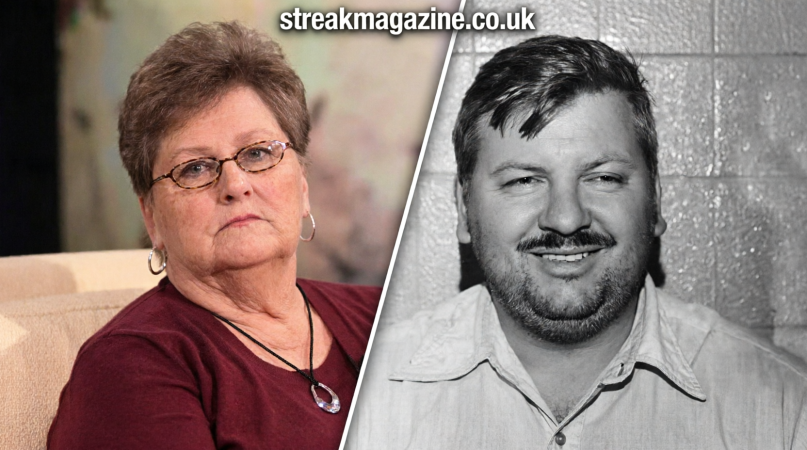
Who Is Christine Gacy?
Christine Gacy is best known as the John Wayne Gacy daughter. She was born in March 1967. Her parents were John Wayne Gacy and Marlynn Myers. She also has an older brother named Michael Gacy. Christine was still a toddler when her parents divorced. Her mother then received custody of both John Wayne Gacy children. Christine grew up away from her father. She did not live in the house where his known murders occurred. She also had no role in the John Wayne Gacy crimes. Her name still appears in true crime searches because people want to know what happened to Christine Gacy. They also ask, “Who is Christine Gacy?” and “Where is Christine Gacy now?” Reliable answers remain limited. Christine has avoided public attention. She has not released a verified memoir or given a major public interview. A responsible Christine Gacy biography must respect those limits. It should explain her family background without inventing details about her personal life. Being related to a criminal does not make someone responsible for that person’s actions.
Quick Bio
| Topic | Information |
|---|---|
| Full Name | Christine Gacy |
| Known For | Reportedly associated with the Gacy family in some online sources. |
| Relationship to John Wayne Gacy | Not verified. There is no reliable public evidence confirming that John Wayne Gacy had a daughter named Christine Gacy. |
| Father | Not publicly verified. |
| Mother | Not publicly verified. |
| Date of Birth | Not publicly available. |
| Age | Not publicly available. |
| Place of Birth | Not publicly available. |
| Nationality | Not publicly verified. |
| Occupation | Not publicly available. |
| Current Status | No verified public information is available. |
Christine Gacy’s Childhood
Christine Gacy spent her earliest years in Waterloo, Iowa. Her father managed several Kentucky Fried Chicken restaurants owned by Marlynn Myers’s family. The family appeared successful from the outside. Gacy earned a good income and became active in the local Jaycees. He presented himself as a husband, father, and ambitious manager. Christine was too young to understand his hidden conduct. Her brother, Michael Gacy, had been born in February 1966. Christine followed in March 1967. This makes the reported Christine Gacy age 59 in 2026. That calculation is based on her reported birth month and year. It does not reveal anything about Christine Gacy today. Her schooling, friendships, career, and adult home have not been reliably documented. Many websites repeat claims about Christine Gacy family life without naming a source. Those details should not be treated as facts. The confirmed story is much shorter. Christine was born during her parents’ marriage. Her father went to prison soon afterward. Her mother ended the marriage and raised the children apart from him.
The John Wayne Gacy Family
The John Wayne Gacy family included his parents, siblings, two wives, two biological children, and two stepdaughters. The parents of John Wayne Gacy were John Stanley Gacy and Marion Elaine Robinson. Some records also identify his mother as Marion Elaine Robison. Gacy had two sisters. One was Karen Kuzma. Karen later appeared in media reports about her brother and the effect his crimes had on the family. John Wayne Gacy Jr. married Marlynn Myers in 1964. Their children were Michael and Christine. After that marriage ended, Gacy married Carole Hoff in 1972. Carole Hoff had two daughters from an earlier relationship. Gacy became their stepfather. That marriage ended in divorce in 1976. Reports about marriage and family show that Gacy could present a conventional public image. They do not prove that he was a caring or safe parent. The experiences of Marlynn, Carole, Michael, Christine, and the stepchildren should also remain separate. Each person had a different relationship with him. Serial killer family members often carry public attention they never requested. Children of serial killers may face even greater pressure because readers search for signs that could explain the parent.
Why Christine Lost Contact With Her Father
The Christine Gacy relationship with John Wayne Gacy appears to have ended during her early childhood. In 1968, Iowa authorities prosecuted Gacy for sexually assaulting a teenage boy. He pleaded guilty to a sodomy charge. The court imposed a ten-year prison term. He spent about 18 months in prison before gaining parole. Marlynn Myers filed for divorce while he was incarcerated. The divorce became final in 1969. She received custody of Michael and Christine. Available accounts say that Gacy did not see the children after the separation. Christine was about two years old at the time. This timeline matters. Gacy’s known serial murder period began years later. Christine did not grow up in his Norwood Park Township home. She did not witness the crawl space victims or the criminal investigation that exposed them. No evidence connects her to his construction business, PDM Contractors, or his later conduct. The question “Did John Wayne Gacy have children?” has a simple answer. He had two biological children. The question “Did John Wayne Gacy have a daughter?” also has a clear answer. Christine was his daughter, but biology did not create a close public relationship.
Christine Gacy Today
People often search for Christine Gacy today, Christine Gacy age, or “Is Christine Gacy alive?” No reliable public report has announced her death. Still, the lack of such a report does not provide permission to trace her present address or private identity. Her location, occupation, marital status, and possible children have not been confirmed through a direct interview or strong public documentation. Some websites claim that her mother changed the family surname. Others publish possible details about her current home. These claims often lack named sources. They may place a private person at risk. The safest factual answer to “Where is Christine Gacy now?” is that her current location remains private. She appears to have stayed outside public life. She has not become a regular participant in a true crime documentary or crime documentary. She also has not publicly promoted the John Wayne Gacy tapes. Christine’s silence cannot tell readers what she thinks about her father. It cannot prove anger, forgiveness, grief, or shame. It only shows that she has not chosen a public role in the John Wayne Gacy case.
Who Was John Wayne Gacy Jr.?
John Wayne Gacy Jr. was an American serial killer and sex offender. He was born in Chicago on March 17, 1942. His childhood biography describes a troubled home. John Stanley Gacy drank heavily and physically abused his son. Marion Elaine Robinson was described as a protective mother. Gacy also reported health problems and childhood sexual abuse. Those events belong in a biography, but they do not excuse predatory behavior or sexual homicide. Millions of abused children never commit violence. Gacy left high school before graduating. He later completed business training. He worked in sales and management before moving to Iowa. There is no sound basis for dramatic military service claims. Gacy did not build a recognized military career. His life before crimes centered on business, social groups, marriage, and the search for public approval. His first conviction proved that his dangerous conduct had already begun. After his release, he returned to the Chicago area. He built another respectable identity. That identity allowed him to find work, gain political contacts, and approach young people without appearing threatening.
Business, Politics, and the Clown Image
Gacy started PDM Contractors after returning to Illinois. The construction business employed many teenage boys and young men. He could offer jobs, cash, alcohol, or a place to stay. He also worked as a Democratic Party precinct captain. Claims that he had a formal role in a “Watergate Democratic campaign” confuse different political events. His best-known political photograph showed him with First Lady Rosalynn Carter in 1978. The image reflected his local access, not a proven connection to Watergate. Gacy also gave clown performances as Pogo the Clown and Patches the Clown. He appeared at some community events and children’s parties. These appearances later produced the Killer Clown label. “The Killer Clown” became a powerful media image, but it can mislead readers. Gacy did not normally use a clown costume to abduct his victims. His business and social authority gave him far more access. The clown image made the case marketable. The construction company made his predatory behavior easier. He looked like a busy contractor and community volunteer while committing serial murder inside his home.
The John Wayne Gacy Crimes
The John Wayne Gacy crimes took place mainly from 1972 through 1978. He targeted teenage boys and other young male victims. Some worked for PDM Contractors. Others were looking for work, money, shelter, or companionship. Gacy brought many victims to his home in unincorporated Norwood Park Township, near Chicago and Norridge, Illinois. He restrained and sexually assaulted them. He usually killed them by strangulation. Investigators later connected him to 33 murders. Twenty-nine murder victims were found beneath or around his property. Four were recovered from the Des Plaines River. The house became known as a home burial site. Most remains were hidden in the crawl space. The phrase mass murderer is sometimes used for Gacy, but serial killer is more accurate. The killings happened in separate events over several years. The case became one of the most infamous examples of 1970s crime and 1970s Chicago violence. It also became part of American crime history. The number 33 should never become a score. Each number represented a person, a family, and a future that Gacy destroyed.
Victims of John Wayne Gacy
The victims of John Wayne Gacy included school students, workers, travelers, and young people facing difficult circumstances. Timothy McCoy is generally recognized as the first known victim. He was 16. John Butkovich was an employee who argued with Gacy over unpaid wages before disappearing. Gregory Godzik also worked for PDM Contractors. William Bundy vanished in 1976 and was identified through DNA identification in 2017. Russell Nelson traveled to Chicago from Minnesota. Samuel Stapleton disappeared in 1976 and was identified years later. Robert Piest was 15 when he vanished in December 1978. His disappearance led police to Gacy. A full John Wayne Gacy victims list contains 33 people, including five who remain unidentified. These were not faceless missing children or anonymous runaways. Some were legal adults. Others were minors. Many families reported them as missing persons and searched for answers. Victimology examines their backgrounds and the ways Gacy reached them. It does not blame them. Good criminology focuses on the offender’s choices, the missed warnings, and the systems that failed to protect vulnerable people.
Robert Piest and the Police Investigation
Robert Piest worked at a pharmacy in Des Plaines, Illinois. On December 11, 1978, he told his mother that he planned to speak with a contractor about a job. That contractor was Gacy. Robert never returned. His family contacted police at once. The Des Plaines police investigation quickly found Gacy’s name. Officers also learned about his earlier sex offense in Iowa. A search of his home revealed handcuffs, identification cards belonging to other young men, and other suspicious items. Police began close surveillance. The criminal investigation gained force as officers interviewed former employees and checked missing persons reports. Gacy eventually made a detailed confession to his lawyers and later spoke with investigators. Police arrested him on December 21, 1978. Searches then exposed the remains beneath his home. Robert’s body was later recovered from the Des Plaines River. The case showed how fast action could change a missing-person inquiry. It also showed how earlier reports about other missing young men had failed to produce the same response. Better information sharing might have stopped Gacy sooner.
The Forensic Investigation
The original forensic investigation relied on dental charts, X-rays, personal records, and physical features. Forensic anthropology helped investigators estimate age, height, and other traits from skeletal remains. The poor condition of some remains made victim identification difficult. The Cook County Sheriff’s Office later reopened the identification effort. Authorities ordered the exhumation of unidentified victims in 2011. Modern DNA identification allowed laboratories to create profiles that could be compared with relatives of missing people. William Bundy was identified in 2017. Francis Wayne Alexander was identified in 2021. Five unidentified victims remain. The Cook County Sheriff’s Office reports that usable DNA profiles now exist for all five. Families of men who disappeared during the 1970s can contact investigators about possible testing. This cold case evidence shows how science can restore a name years after a crime. The Federal Bureau of Investigation, or FBI, also shaped the wider study of serial murder and criminal profiling during this period. However, local Cook County agencies led the current identification work. Bruce Lindahl was another suspected Illinois serial killer. His cases used modern DNA evidence too, but he was not a confirmed Gacy victim or partner.
Trial, Conviction, and Death Row
Gacy awaited legal proceedings in the Cook County Jail system before his murder trial. His trial opened in February 1980. The defense argued that mental illness prevented full legal responsibility. Experts offered different opinions about psychopathy, antisocial personality disorder, and other diagnoses. A diagnosis does not erase planning or criminal responsibility. Prosecutors presented physical evidence, witness accounts, and Gacy’s confession. The jury found him guilty of 33 murders on March 13, 1980. The criminal conviction led to sentencing under the Illinois death penalty. Gacy entered death row and pursued appeals for years. He also painted, wrote letters, and gave interviews. At times, he denied responsibility despite his earlier statements and the evidence. His shifting stories did not overturn the verdict. The John Wayne Gacy timeline then moved through state and federal appeals. Courts continued to uphold his sentence. The case became part of the national debate about capital punishment. Supporters pointed to the scale of the crimes. Critics questioned whether execution by the state was just or necessary. Gacy remained in state custody until 1994.
Execution and Final Hours
The State of Illinois carried out Gacy’s execution by lethal injection on May 10, 1994. The execution date came more than 14 years after his conviction. He died at Stateville Correctional Center under the authority of the Illinois Department of Corrections. Reports describe his final meal as fried chicken, fried shrimp, french fries, strawberries, and a soft drink. His reported last words were “Kiss my ass.” The 1994 execution experienced a delay because of a problem with the equipment used to deliver the chemicals. Medical staff corrected the issue, and the execution continued. Gacy was pronounced dead shortly after midnight. His death ended his time on death row, but it did not finish the work of victim identification. It also did not answer every question about missed police warnings or unidentified remains. The execution by lethal injection became one of the most widely reported uses of capital punishment in Illinois. The state later ended the death penalty in 2011. Gacy’s execution remains part of that wider legal history, but the unresolved victims remain the more urgent human story.
True Crime Media and the Gacy Tapes
The John Wayne Gacy case has produced books, films, podcasts, and television programs. Some use the killer clown image as entertainment. Others focus on the young male victims and the criminal investigation. Netflix released Conversations with a Killer: The John Wayne Gacy Tapes in 2022. The true crime documentary used about 60 hours of recorded conversations with Gacy’s legal team. These John Wayne Gacy tapes showed his efforts to control the story and deny responsibility. The Netflix series also included investigators, lawyers, and people connected to the case. Peacock released the drama Devil in Disguise: John Wayne Gacy in 2025. It followed an earlier Peacock documentary from 2021. The newer program gave more attention to victims and social failures. A crime documentary can educate viewers when it checks facts and avoids spectacle. It can also cause harm when it treats murder as a puzzle built for excitement. Responsible true crime should name victims, explain police failures, and separate dramatic scenes from proven evidence. It should not use Christine’s private life as a fresh source of entertainment.
The John Wayne Gacy Legacy
The John Wayne Gacy legacy reaches beyond Pogo the Clown and the image of a killer clown. The case changed public discussion about missing persons, teenage boys, sexual abuse, and gaps between police agencies. It showed how quickly officers could dismiss young people as runaways. It also exposed the harm caused by homophobia and class prejudice. Gacy’s public status helped hide predatory behavior. He owned a construction business, attended political events, and acted like a respected neighbor. His case now appears in studies of serial murder, sexual homicide, victimology, criminal profiling, and American crime history. It also warns against using psychopathy or antisocial personality disorder as simple explanations. Labels do not explain every choice. Gacy planned his acts and hid evidence. He understood that discovery would bring punishment. The five unidentified victims remain the unfinished part of the case. Their DNA profiles offer hope for future identification. Their names matter more than Gacy’s paintings, final meal, political photograph, or clown costume. The most honest legacy places those victims at the center.
Conclusion
Christine Gacy entered public awareness through a family connection she did not choose. She was the daughter of an American serial killer, but she was never part of his crimes. She left his household as a toddler. She lived away from the home burial site, the crawl space victims, and the later police investigation. Her current personal life remains private. Searches for “What happened to Christine Gacy?” should not become excuses for rumor or harassment. John Wayne Gacy committed 33 murders. He received a fair trial, a criminal conviction, and a death sentence. Illinois carried out his execution in 1994. Yet the case did not end at Stateville Correctional Center. Five victims still lack confirmed names. Investigators continue using cold case evidence, forensic anthropology, and DNA identification. That work deserves more attention than speculation about Christine. Her place in the story shows that children do not inherit a parent’s guilt. The victims’ place in the story reminds readers that true crime should protect human dignity rather than turn suffering into a brand.
Frequently Asked Questions
Did John Wayne Gacy Have a Daughter?
Yes. John Wayne Gacy had a daughter named Christine Gacy. She was born in March 1967 during his marriage to Marlynn Myers. Christine was about two when her parents divorced.
Did John Wayne Gacy Have Children?
Yes. The John Wayne Gacy children were Michael Gacy and Christine Gacy. Michael was born in February 1966. Christine was born in March 1967.
Where Is Christine Gacy Now?
The current location of Christine Gacy is not confirmed by dependable public sources. She appears to have maintained a private life.
Is Christine Gacy Alive?
No reliable public source has reported that Christine Gacy has died. She would be about 59 in 2026 based on her reported March 1967 birth date.
How Many Gacy Victims Remain Unidentified?
Five victims of John Wayne Gacy remain unidentified as of July 2026. The Cook County Sheriff’s Office has DNA profiles for all five.
